There is a difference most players never notice: the opening board is authored by a designer, while everything that falls afterwards is drawn at random. Treating those two as the same thing is what makes an opening feel unlucky.
The opening board is a decision, not a shuffle
Level designers place the starting layout deliberately. The obstacles sit where they cause the most inconvenience, the goal tiles sit where reaching them requires a plan, and any easy match visible at the start is usually there to tempt you into spending a move on it.
Once the first match resolves, that authored arrangement is gone and never returns. What replaces it is drawn from the level's colour set at random. So the opening is the only part of the level anyone thought about specifically, and it is the part worth the most attention.
What that means for the first three moves
Because the opening is designed, the obvious match is frequently a trap: it is obvious because it is near the top where you look first, and clearing near the top barely disturbs anything beneath it.
The productive opening is nearly always low on the board. A match at the bottom pulls every tile above it down into new positions, some of which will match by accident, and each accident repeats the loop for free. A match at the top moves three tiles and stops.
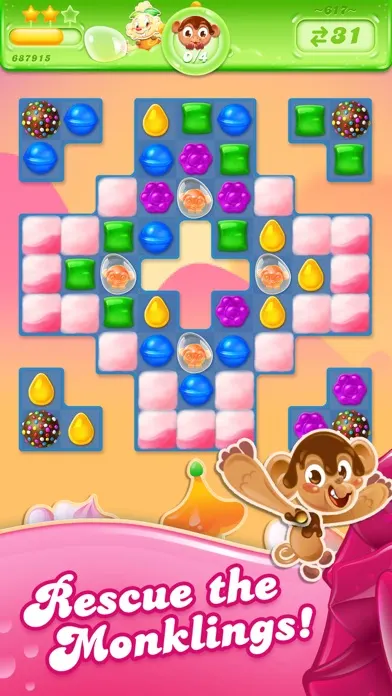
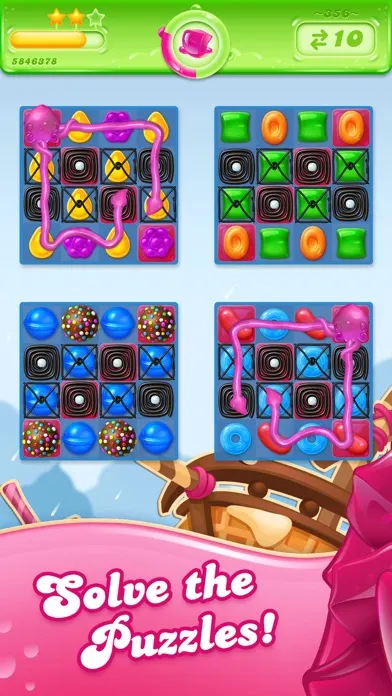
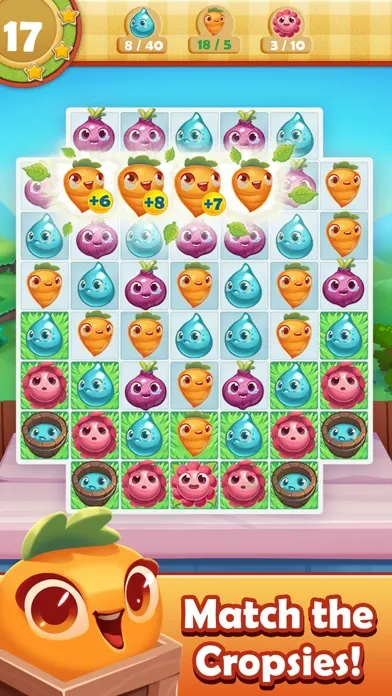
A habit worth building: before the first move, ignore the top third of the board entirely. Nearly everything that decides the level is in the bottom two thirds, and the top will be replaced within a few moves anyway.
Spotting the seeded difficulty
Designers have a small set of tools for making a level hard without changing the goal, and all of them are visible at the start.
- Colour count. Five colours on a small board is tight; three is generous. Nothing announces this and it is the single strongest difficulty dial in the genre.
- Blockers in columns. A blocker stops tiles falling past it, which turns everything above it into a small isolated board with its own refill.
- Split boards. Two regions connected by a narrow neck behave like two separate levels until the neck is opened.
- Goal tiles placed apart. Scattered goals cannot be taken in one large match, which quietly raises the number of moves required.
Counting colours takes two seconds and changes the plan. With three or four, you can afford to wait for large groups. With five or more, large groups will not form on their own and you have to build them by clearing underneath clusters so they fall together.
Why the refill feels unfair and is not
The tiles entering from the top are drawn by the game, and no sequence of moves changes what arrives. There is no tap rhythm, no lucky order, no way to force a colour, and anything claiming otherwise is wrong.
What you do control is the shape of the gap the new tiles fall into. A tall narrow gap concentrates arrivals in one column, which raises the chance of a vertical match among them. A wide flat gap spreads them out and lowers it. That is the whole extent of the influence available, and it is real, which is why it is worth using instead of superstition.
Restarting to see the layout again
A level restarted usually returns the same authored opening, which makes a first attempt genuinely useful even when it fails. Play it out, note where the goal actually was and which region opened late, then restart and open properly. Some levels in this genre are effectively designed to be seen once before they can be played well, and recognising one saves a lot of irritation.